Automatic Lead Scoring: How to Prioritize the Right Clients
Learn how automatic lead scoring in your CRM helps you focus on the hottest leads, automate qualification and close more deals faster.

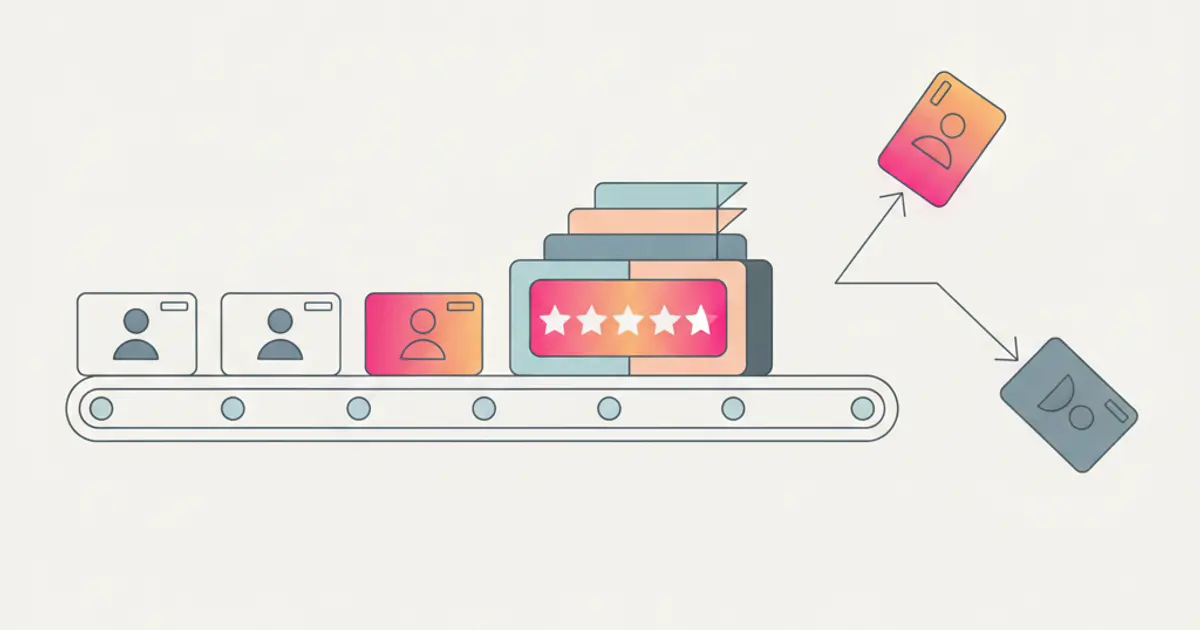
You have fifty leads in your pipeline. You already know not all of them will become clients, but you have no idea which ones deserve your attention right now and which can wait. So you do what everyone does: start from the top of the list, call the first one, then the second, hoping you guess right. Meanwhile, the lead who was ready to buy today gets contacted tomorrow — when they have already chosen someone else.
The problem is not the number of leads. It is the lack of priorities. Without a system that tells you "this lead is hot, call them now," your sales team wastes valuable time on cold contacts and misses opportunities on the ones who are ready. It is like fishing with dynamite: lots of noise, very few good catches.
Automatic lead scoring solves exactly this problem. It assigns a score to every lead based on concrete data: behavior, demonstrated interest, fit with your ideal customer profile. The result? Your team always knows who to focus on, conversions go up, and the sales cycle gets shorter. Let us see how it works in practice.
What Lead Scoring Is and Why You Need It
At its core, lead scoring is a system that assigns a numerical score to each lead indicating their probability of converting into a paying client. It is the difference between "having lots of leads" and "having the right leads at the top of the list."
If you manage a small team with ten leads in the pipeline, you probably do not need a scoring system. Your sales rep knows each one personally and can prioritize intuitively. But the moment your pipeline grows to fifty, a hundred, or more leads, that intuition breaks down. You cannot hold the details of a hundred relationships in your head simultaneously, and even if you could, your colleagues cannot read your mind. What happens when you are out sick and someone else needs to pick up your pipeline?
The impact on revenue is direct and measurable. Teams that focus their efforts on high-probability leads consistently see close rates increase by 20 to 30 percent compared to teams working through unsorted lists. The reason is simple: you are contacting people who are ready to buy at the moment they are most receptive, instead of spreading your energy equally across prospects with wildly different levels of interest.
Manual scoring — where a manager reviews each lead and assigns a priority — works in theory but fails in practice. It is subjective, inconsistent, and impossible to maintain at scale. Automatic scoring applies the same criteria to every lead, every time, without bias or fatigue. And crucially, it updates in real time as new data flows in, so a lead that was lukewarm yesterday can jump to the top of the list today because they just visited your pricing page three times. For a broader view of how scoring fits into your sales pipeline, that guide covers the full picture.
Scoring Criteria: How the Score Is Calculated
A good lead scoring model combines three categories of data, each contributing a different dimension to the overall picture.
Demographic and Firmographic Data
The first dimension is who the lead is. This includes their industry, company size, job title, geographic location, and how closely they match your Ideal Customer Profile. If your best clients are mid-sized marketing agencies in northern Europe, a lead that fits that description starts with a higher baseline score than a solo freelancer in an unrelated industry. The logic is straightforward: leads that resemble your existing best clients are more likely to convert and to become profitable, long-term accounts.
Behavioral Data
The second dimension is what the lead does. Every interaction a lead has with your business generates data: website visits, emails opened, content downloaded, WhatsApp messages responded to, webinar attendance, demo requests. These actions reveal intent. A lead who visits your pricing page, downloads a case study, and responds to a follow-up email within an hour is clearly more engaged than one who opened a single email two months ago and has been silent since.
Frequency and recency matter enormously here. A lead who was active three months ago but has gone dark is not the same as one who interacted yesterday. Good scoring models apply time decay, gradually reducing points for leads whose activity has stalled, and boosting scores for recent engagement.
CRM Data
The third dimension is what you already know from your pipeline. This includes the potential deal value, the current pipeline stage, how long the lead has been in that stage, and any urgency signals like a confirmed budget, a project deadline, or a competitive evaluation in progress. A lead sitting in the "Proposal Sent" stage for two days with a large deal value scores very differently from one stuck in "Initial Contact" for three weeks with no follow-up.
Automating Lead Scoring in the CRM
Setting up automatic lead scoring is not a one-time event — it is a configuration that evolves with your business. You start by defining the criteria and weights: which behaviors add points, which firmographic traits add points, and how much each factor is worth. For example, you might decide that a demo request adds 20 points, opening an email adds 2 points, and matching your target industry adds 15 points.
Once configured, the CRM calculates and updates scores in real time. Every interaction immediately refreshes the score, so your priority list is always current. This is where automation becomes truly powerful: you can set up automatic workflows triggered by score thresholds. When a lead crosses 80 points, the CRM can automatically assign them to a senior sales rep, send an internal notification, and queue a personalized follow-up message — all without anyone lifting a finger.
Periodic re-scoring is equally important. Leads that remain inactive gradually lose points over time, preventing stale contacts from clogging the top of your list. Meanwhile, leads showing renewed interest automatically climb back up. This dynamic approach ensures that your scoring reflects reality, not a snapshot from weeks ago.
Integration with the Sales Pipeline
Lead scoring becomes exponentially more powerful when it is deeply integrated with your sales pipeline. Instead of viewing your pipeline as a flat list of deals sorted by creation date, you can sort by conversion probability, so the most promising opportunities always appear first.
For sales reps, this means opening the CRM in the morning and immediately seeing the day's top priorities — no guesswork, no manual review, no asking the manager "who should I call first?" The system has already made that decision based on data.
Automatic distribution takes this further. High-scoring leads can be routed to your best-performing reps, while lower-scoring leads go into nurturing sequences handled by email marketing automations. This ensures that your most valuable human resources are always working on the highest-value opportunities.
The marketing-to-sales handoff also benefits enormously. Instead of marketing passing every form submission directly to sales — overwhelming reps with unqualified contacts — leads only transition to the sales team when they reach a minimum score threshold. Below that threshold, they stay in marketing's nurturing pipeline, receiving educational content and gentle engagement until they are genuinely ready for a sales conversation. The result is a cleaner pipeline, happier sales reps, and marketing that can clearly demonstrate its contribution to revenue.
Dashboard and Lead Scoring Analytics
Setting up lead scoring is only half the job. The other half is measuring and refining it over time. A scoring dashboard should show you the distribution of leads across score brackets — how many are cold, warm, and hot at any given moment — and, critically, whether high-scoring leads actually convert at higher rates than low-scoring ones.
If your scoring model says a lead at 90 points has a high probability of closing, but your data shows those leads close at the same rate as leads at 50 points, something is wrong with your criteria. The correlation between score and conversion is the single most important metric for validating your model, and you should review it monthly.
Over time, you will refine the weights. Maybe you discover that webinar attendance is a stronger buying signal than you initially thought, or that company size matters less than you assumed. A/B testing different scoring configurations — running two models simultaneously and comparing their predictive accuracy — is the fastest way to optimize. The teams that invest in this refinement process are the ones that see the most dramatic results from lead scoring.
For management, scoring analytics feed directly into revenue forecasting. When you know that your pipeline contains forty leads above your "hot" threshold with an average deal value of a certain amount, you can build forecasts grounded in data rather than hope. Pair this with custom dashboards and your leadership team gets a real-time view of pipeline health that updates itself automatically.
Concrete Results: What to Expect
When implemented well, automatic lead scoring delivers results that compound over time. In the first month, you will notice your team spending less time on unqualified contacts and more time on genuine opportunities. Conversion rates typically increase by 20 to 30 percent as reps focus their energy where it matters most.
The sales cycle shortens because you are contacting leads at their moment of peak interest, rather than reaching out days or weeks later when their attention has shifted elsewhere. Response rates go up, meetings book faster, and deals progress through the pipeline with less friction.
Your forecasting becomes more reliable because score-based predictions are grounded in behavioral data rather than subjective assessments. And perhaps most importantly, the system creates a virtuous cycle: the more data you collect, the more precise the scoring becomes, which produces better prioritization, which generates more conversions, which feeds more data back into the model.
If you are still managing leads without scoring — relying on spreadsheets or your team's memory to decide who to call next — the gap between you and your more organized peers is widening every day. The shift from Excel to a proper CRM is where this transformation begins.
Share this article
Written by
Flusia Team
Related articles

How to Manage Leads Without Losing Them: 7 Mistakes Costing Your SME Sales
Discover the 7 most common lead management mistakes and how a structured CRM can help your SME stop losing sales opportunities.
Sales Pipeline: Why Your Business Needs One (and How to Build It)
Learn what a sales pipeline is, why spreadsheets fall short, and how to build a structured sales process for your SME.
Custom Dashboards and Reports: The Numbers That Really Matter
Learn how custom CRM dashboards and reports give you visibility into sales KPIs, margins and pipeline to make data-driven decisions.