How to Set Up a Quote with Deposit and Instalments
How to set up a quote with a deposit at signature and the balance in dated instalments: percentages, due dates, invoices, and three common project cases.

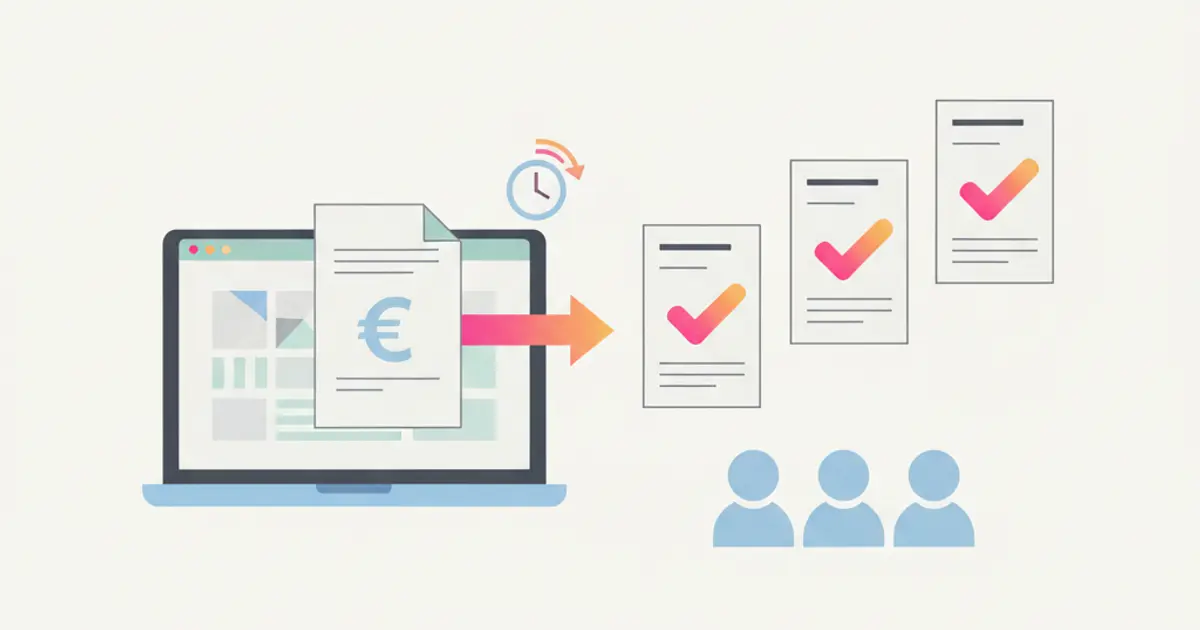
To set up a quote with a deposit and instalments, you add a payment schedule to the document itself: a first amount due at signature, then each remaining instalment with its percentage or fixed amount and a real due date, with the total of the instalments matching the total of the quote. For example: 40% on signature, 30% by a set date, 30% on delivery or by a second date. The schedule belongs in the quote the client signs, not in a later email, so that what they accept already says how and when they pay.
If you sell project work and every job starts with an awkward conversation about money after the client has already said yes, by the end of this guide you will have a quote that settles the deposit and the instalments before the work begins, and a way to make sure each one turns into an invoice on the right date.
What you need before you start
- The total of the project, split by service. Design, development, training and support rarely follow the same payment logic, so it helps to know which part of the price belongs to which service. If your quote is still one line with one number, the structure is covered in the guide on how to write a professional quote.
- A decision on the deposit. How much you want before you start, and why: covering the first weeks of work, booking your team's time, buying materials or licences on the client's behalf. A deposit you can explain is a deposit the client accepts without haggling.
- The events the instalments hang on. A calendar date, a number of days after signature, or a project milestone such as approval of the design or go-live. Write them down before you open the quote.
- The client's billing details: company name, tax number, address and whatever your country requires to deliver an invoice. Missing details are what turn a deposit due today into a deposit invoiced next week.
- One place where the quote, its status and its instalments live together. If the schedule sits in a spreadsheet and the quote sits in a folder, sooner or later the two disagree.
How to set up a quote with deposit and instalments, step by step
- Add the services to the quote, each with its own price. Pick them from your catalogue or write them in, with quantities and any discount. At this point you see the total of the quote and the amount of every line, which is what the instalments will be calculated on.
- Open the payment schedule of the service and add the first instalment. Choose whether it is a percentage or a fixed amount. A percentage keeps working if the price changes before signature; a fixed amount is clearer when the deposit covers something specific, like a licence you buy upfront. Set the due date of this first instalment to signature, or a few days after it.
- Add the remaining instalments one by one. For each one choose how the due date is set: a specific date, a number of days or months after the start, a fixed day of the month, or a date still to be defined when it depends on a milestone you cannot date yet. You will see the list of instalments with their amounts next to each other.
- Check that the instalments add up to the total. The sum of the instalments has to equal the amount of the service, to the cent. If it does not, the schedule is wrong, and it is far cheaper to find out now than when the last invoice is short by a rounding difference.
- Set the payment terms of each invoice. The due date of an instalment says when the invoice is issued; the payment terms say how many days the client has to pay it after that. Keep the two apart: "second instalment invoiced on 15 March, payable within 15 days" is clear, "second instalment by March" is not.
- Write the schedule in plain words in the document. Apart from the table, one sentence the client can read in five seconds: "40% on signature, 30% on approval of the design, 30% on go-live". This is the line people remember and quote back to you.
- Send the quote for signature. The client signs from a link on the phone, or signs the PDF and uploads it back. The step by step for both routes is in the guide on how to get a quote signed online. Once it is signed, the deposit and the instalments are no longer a proposal: they are the agreed terms.
- Let the invoices start from the signed schedule. In the Flusia quoting module the signature starts the invoices and the instalments with their due dates already set, and the e-invoice goes through the provider you already use, such as Fatture in Cloud. You will see the deposit ready to invoice and the other instalments waiting on their dates, without retyping a single amount.
Variant 1: a project-based service with deposit and milestones
This is the classic case: a website, a brand identity, a software feature, a fit-out. The work has a beginning, a few checkpoints and an end, and payments follow the checkpoints.
Imagine a design agency of eight people quoting a new website at 12,000 before tax, in whatever currency you invoice in. A schedule that works might be:
| Instalment | Amount | When it is due |
|---|---|---|
| Deposit | 40%, i.e. 4,800 | on signature |
| Second instalment | 30%, i.e. 3,600 | on approval of the design, date to be defined |
| Balance | 30%, i.e. 3,600 | on go-live, or 60 days after signature at the latest |
Two details make the difference. The first is the "at the latest" on the balance: a milestone that depends on the client, such as sending the content, can slip for months, and a fallback date stops your final payment from slipping with it. The second is the "date to be defined" on the middle instalment: you keep it in the schedule with its amount, and you set the date when the milestone is reached, instead of leaving it out and remembering it by heart.
If the project has more than one service, give each service its own schedule. Development can follow milestones while hosting or a yearly licence follows its own dates, and mixing them into one plan makes both harder to read.
Variant 2: a retainer with a first instalment upfront
Monthly or quarterly services, such as marketing management, maintenance or consulting days, do not have a finish line. Here the "deposit" is really the first period paid in advance, plus sometimes a setup fee.
A typical structure: a one-off setup fee on signature, then the first month on signature too, then the following months on a fixed day of the month. Using a fixed day, for example the first of every month, keeps the invoices aligned with the client's own accounting and makes a missing payment easy to spot.
What to write in the quote:
- the length of the commitment (six months, twelve months, or open-ended with notice);
- what happens at the end: renewal on the same terms, or a new quote;
- whether the fee is monthly or yearly, and whether a yearly payment changes the price.
For a retainer the start matters more than it seems. Link it to a verifiable event, such as the kick-off meeting or the first delivery, and write it down: "first month from 1 November" leaves no room for "we had not started yet".
Variant 3: the client asks to spread the payments
Sometimes the schedule is not your idea: the client likes the proposal but asks to pay in more instalments, or to move the deposit later. It is a negotiation, and it is worth handling like one.
Change the schedule, not the price, and issue a new version. If you agree to spread the payments, update the instalments in the quote and send it as a new numbered version that replaces the previous one. A promise made in a chat message and never written into the document is the one that gets contested at the third instalment.
Keep a real deposit. Spreading the balance over four months is one thing; starting the work with nothing paid is another. A smaller deposit is a reasonable concession, no deposit at all rarely is.
Tie the longer tail to delivery, not to the calendar alone. If the last instalment falls months after the project ends, you are financing the client. Accept it knowingly, or ask for the handover of final files or credentials to follow the last payment where your contract allows it.
If you discuss this over chat, the same rules apply: send the updated document, not just a message with new numbers. How to do that cleanly is in the guide on how to send a quote on WhatsApp.
Deposit invoices and tax: what to keep in mind
In many tax systems a deposit can become taxable when it is paid or invoiced, not when the work is finished, and the deposit invoice then has to be taken into account when the balance is invoiced so that tax is not charged twice. The exact rules, the moment the tax becomes due and the wording required on the invoice vary from country to country and from one type of service to another.
What you can do in any case is keep the schedule and the invoices tied together: every invoice should say which quote and which instalment it refers to, and the total invoiced should end up equal to the total signed. That is the check your accountant will ask for anyway, and it is much easier when the instalments come out of the quote instead of being rebuilt by hand. How to organise the invoicing side in general is covered in the guide to automatic invoicing for small businesses.
These are general guidelines: for your specific case, check with your accountant.
Common mistakes
Instalments that do not add up. Three times 33% makes 99%, and the missing one per cent turns into an awkward last invoice. Use percentages that sum to 100, or let the last instalment be the balance.
Milestones without a fallback date. "On go-live" is fair until go-live waits for the client's content for four months. Always add "or by a set date at the latest" to instalments that depend on the other side.
Agreeing the schedule outside the document. Terms negotiated on the phone and never written into the quote are the ones nobody remembers the same way. If the schedule changes, the quote changes, with a new version.
Forgetting to follow up the signature. A quote with a perfect payment schedule is worth nothing until it is signed. Plan your contacts after sending it, as described in the guide on how to follow up a quote.
Who we are
Flusia is an Italian CRM for small and mid-sized businesses that brings leads, clients, quotes, projects and invoicing into one place. Quotes are built from your service catalogue with your own PDF or Word template, instalments have real due dates, the client signs from a link, and at signature the invoices and instalments start with their due dates already set. You can try it free for 30 days, with no card required.
How long it takes and what comes next
Setting up your first quote with a deposit and instalments takes about twenty minutes, most of it spent deciding the milestones rather than typing. Once you have a schedule that works for a type of project, you reuse it, and the next quotes take a few minutes.
The natural next step is to try it on a real proposal: build your next quote with its payment schedule in the Flusia quoting module during the 30-day trial, send it for signature, and check that the deposit is ready to invoice the moment the client signs.
Frequently asked questions
How much should the deposit on a quote be? There is no universal figure: it depends on how much work, and how many purchases on the client's behalf, come before the first milestone. The useful test is simple: the deposit should cover what you would lose if the client stopped right after signing.
Is it better to use percentages or fixed amounts for the instalments? Percentages adapt if the price changes before signature and are easier for the client to read. Fixed amounts suit instalments that pay for something specific, such as a licence or a piece of hardware. You can mix them, as long as the total matches the quote.
What if a milestone is late because of the client? That is why each milestone-based instalment should carry a fallback date. If the date arrives before the milestone, the instalment falls due anyway, as agreed in the signed quote. Say so clearly in the document, and remind the client politely when the fallback date approaches.
Can I change the instalments after the quote has been signed? Only by agreement with the client, and in writing: issue an updated version or an addendum that both sides accept, and keep the original signed document. Changing the schedule quietly in your own system creates invoices the client does not recognise.
Share this article
Written by
Luca Bosso
Founder of Flusia
Related articles
How to Send a Quote on WhatsApp
How to send a quote on WhatsApp: PDF or link, from phone or desktop, what to write with it, and how to handle the reply, the acceptance and the follow up.

Quoting Software: How to Choose the Right One
What quoting software has to do: reusable templates, one price list, statuses and expiry dates, plus how to move across from documents without stopping work.
How to Build a Price List for Your Services
How to build a price list for your services: line items, units, pricing criteria, volume tiers, discount rules and reviews that keep quotes consistent.