How to Manage Leads Without Losing Them: 7 Mistakes Costing Your SME Sales
Discover the 7 most common lead management mistakes and how a structured CRM can help your SME stop losing sales opportunities.


Every day, dozens of potential customers knock on your company's door. They fill out a form, message you on WhatsApp, call after seeing a social media post. And what happens next? You jot them down on a notepad, add them to a spreadsheet, or — worst case — trust your memory to handle it.
The outcome is painfully predictable: industry data shows that SMEs lose up to 40% of their leads due to the lack of a structured process. Not because the product is flawed, not because the pricing is off, but simply because nobody called that contact back within 24 hours.
If this sounds familiar, you are not alone. The good news is that most of these mistakes are entirely avoidable with a shift in method — and the right tools. In this article we break down the 7 fatal errors costing SMEs real revenue and show you how to fix each one without overhauling the way you work.
Why SMEs lose 40% of their leads
The average response time in most small businesses exceeds 24 hours. That might not sound alarming until you consider the research: a lead contacted within five minutes is 21 times more likely to enter the sales process than one contacted after 30 minutes. After an hour, the odds drop even further.
The root cause is almost always the same. Leads arrive from multiple channels — your website, social media, WhatsApp, phone calls, trade shows — and they end up scattered across different tools. One sits in someone's email inbox. Another lives as a note on a phone. A third was mentioned in a team chat and promptly forgotten. Without a centralized system, follow-ups become a game of chance.
Think about the real cost for a moment. If your average deal is worth 2,000 euros and you lose just two leads per week to slow follow-up, that is over 200,000 euros in missed revenue per year. Not hypothetical revenue — real opportunities that walked through your door and walked right back out because the process let them down.
The problem is not effort. Your team is busy. The problem is that effort without structure creates the illusion of activity while deals slip through the cracks silently. The solution starts with understanding exactly where the process breaks down.
The 7 fatal lead management mistakes
1. No single point of collection
When leads arrive in five different places — email, spreadsheets, phone notes, sticky notes, WhatsApp — nobody has the full picture. A salesperson might call a lead that a colleague already contacted, creating confusion and a poor first impression. Worse, some leads simply vanish because they were captured in a place nobody checks regularly.
The fix is straightforward: every lead, regardless of where it originated, should flow into one single system automatically. A CRM with multichannel capture does this natively. Web forms, WhatsApp messages, and email inquiries all land in the same pipeline, tagged with their source, ready to be worked. No more hunting across five tools to find that phone number someone scribbled down last Tuesday.
2. Failing to qualify incoming leads
Not every contact is a potential customer. Some are browsing, some are not a fit for your service, and some are ready to buy today. Treating all of them the same is one of the most expensive mistakes you can make. Your sales team ends up spending equal time on a casual inquiry and a hot prospect, which means the hot prospect waits — and often buys elsewhere.
Lead qualification does not require a complex scoring algorithm. Start with three simple questions: Does this contact have a genuine need? Do they have the budget? Is the timing right? Even a basic tagging system — cold, warm, hot — dramatically improves how your team allocates their time. Over time, you can refine this with automatic lead scoring that assigns points based on behavior and demographics.
3. Response times that are too slow
After five minutes, the probability of converting an inbound lead drops by 80%. Yet most SMEs respond in hours, if not days. The reason is simple: the lead notification arrives, but the person responsible is in a meeting, on a call, or simply does not see it in time.
Real-time notifications change the game entirely. When a new lead triggers an instant alert on your phone — with the contact's name, source, and details — you can respond within minutes, even if you are away from your desk. Better yet, automated workflows can send an immediate acknowledgement message on your behalf, buying time while ensuring the lead feels seen. A simple "Thanks for reaching out, we will call you within the hour" can double your conversion rate compared to radio silence.
4. No structured follow-up process
Research consistently shows that 44% of salespeople give up after the first contact. Yet the majority of deals close after the second, third, or even fourth touchpoint. If your follow-up strategy is "I will remember to call them back," you are leaving money on the table.
A structured follow-up process means defining exactly what happens after first contact: a follow-up call at 24 hours, an email at 72 hours, a check-in at one week. The best part is that this sequence can be fully automated within a CRM. You set the rules once, and the system creates tasks, sends reminders, and even triggers WhatsApp messages on schedule. Your salespeople focus on conversations, not on remembering who to call next.
5. Non-existent or poorly configured pipeline
Without clearly defined stages, you have no idea where each opportunity stands. "I think we sent them a proposal" is not pipeline management — it is guesswork. A well-structured sales pipeline gives you a visual map of every active deal, from first contact to close.
The essential stages are simple: first contact, qualification, proposal, negotiation, and close (won or lost). Each stage has clear entry criteria and a defined next action. When you can glance at your pipeline and instantly see that 15 deals are in proposal stage and 3 have been stuck in negotiation for two weeks, you know exactly where to focus your energy. Without this visibility, you are flying blind.
6. Zero visibility for the team
When a salesperson leaves the company, what happens to their client relationships? If the answer is "the information leaves with them," you have a serious problem. The same applies when a colleague is sick, on holiday, or simply needs help with a large account. If the interaction history lives only in one person's head or personal phone, the rest of the team is powerless.
Shared dashboards and a complete activity history solve this instantly. Every call, email, note, and meeting is logged against the contact record. When someone else needs to step in, they have full context: what was discussed, what was promised, and what the next step should be. This is not just about continuity — it is about building a business that does not depend on any single individual.
7. Measuring nothing at all
If you do not measure, you do not improve. It is one of the oldest principles in business, and yet most SMEs track their sales performance using gut feeling and end-of-month bank statements. By the time you realize something is wrong, the quarter is already lost.
The key metrics are not complicated: conversion rate (what percentage of leads become clients), average close time (how long deals take from first contact to signature), and average deal value. A CRM with custom dashboards shows these numbers in real time, allowing you to spot trends early. If your conversion rate drops this week, you investigate now — not after three months of declining revenue.
How a structured CRM solves every point
The seven mistakes above share a common thread: they are all process problems, not people problems. Your team is not lazy or incompetent. They simply lack the structure and tools to work consistently at scale.
A properly configured CRM addresses every single point. Automatic multichannel lead capture eliminates scattered data by funneling every inquiry into one place. A visual kanban pipeline with drag-and-drop functionality gives you instant clarity on where every deal stands. Workflow automations handle follow-ups, notifications, and lead assignment without human intervention.
Real-time dashboards surface the KPIs that matter, so you make decisions based on data instead of intuition. A complete interaction history for every contact ensures that knowledge never walks out the door with an employee. And mobile access means your sales team can update deals, log notes, and respond to leads from anywhere — whether they are at the office, in a client meeting, or on the road.
The beauty of modern CRM tools is that you do not need to implement everything at once. Start with lead capture and pipeline visibility. Add automations once the team is comfortable. Layer in advanced reporting when you are ready to optimize. If you run an agency, the same seven gaps reappear one step later, in the handoff between the deal you just won and the team that has to deliver it: managing clients in a marketing agency covers what has to travel with the client record once the pipeline stage says "won". The key is to start — because every week without a structured process is another week of leads slipping through the cracks.
Conclusion
Losing leads is not inevitable. It is the predictable result of relying on memory, spreadsheets, and fragmented tools to manage a process that demands structure and consistency. The seven mistakes we covered — from scattered collection points to zero measurement — represent the most common ways SMEs silently hemorrhage revenue.
The first step is not buying a tool. It is mapping your current process and honestly identifying where the gaps are. How do leads come in? Who responds? How quickly? What happens after the first contact? Once you see the gaps clearly, the path forward becomes obvious.
Technology alone is not enough without a clear process behind it. But a clear process without the right technology hits a ceiling very quickly. The combination of method and tools is what transforms a chaotic sales operation into a predictable revenue engine.
Start simple. Pick the one mistake from this list that hurts the most and fix it this week. Then move to the next. Within 30 days, you will have a system that captures every lead, follows up on time, and gives you the visibility to make smarter decisions — and you will wonder how you ever managed without it.
Share this article
Written by
Luca Bosso
Founder of Flusia
Related articles
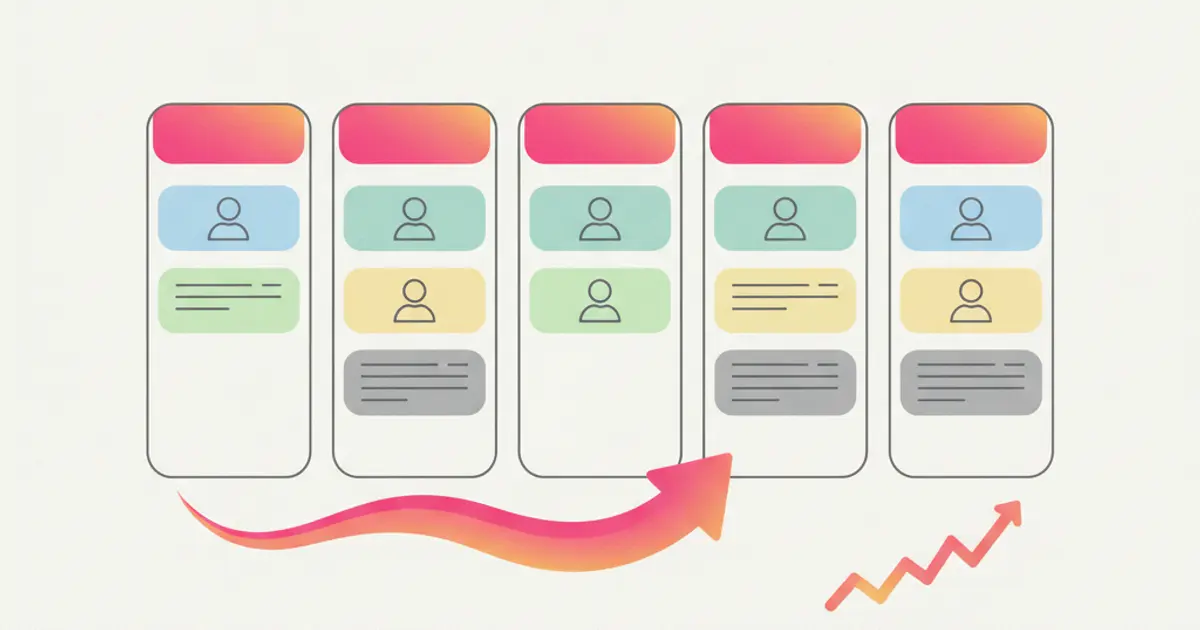
Sales Pipeline: Why Your Business Needs One (and How to Build It)
Learn what a sales pipeline is, why spreadsheets fall short, and how to build a structured sales process for your SME.
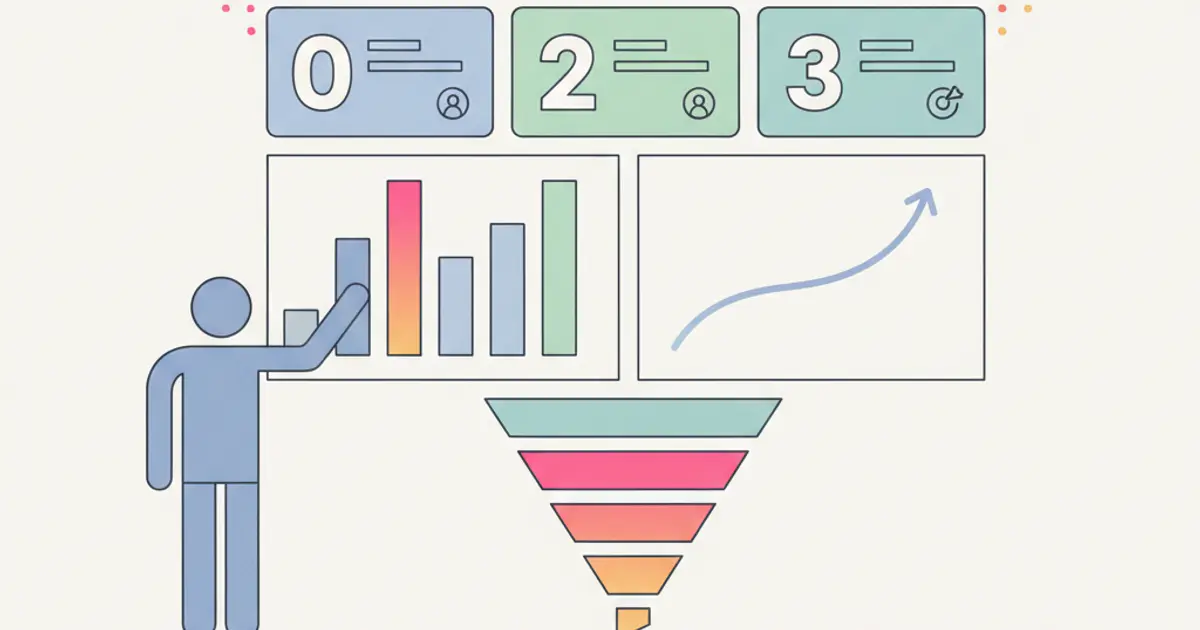
How to Calculate Sales Commissions for Agents
A practical guide to sales commission calculation: rates, tiers, referrers, margin based plans and how to make the CRM run the numbers for you.
Managing Quotes Without Spreadsheets: A Practical Guide
How a small business can run quotes properly: the fields that matter, shared statuses, automatic follow-ups and a clean handover from quote to invoice.