WhatsApp as a Sales Channel: It's Not Just Customer Support
WhatsApp isn't just customer service: learn how to use it as a sales channel with automations, AI agents and CRM integration to qualify leads and close deals.

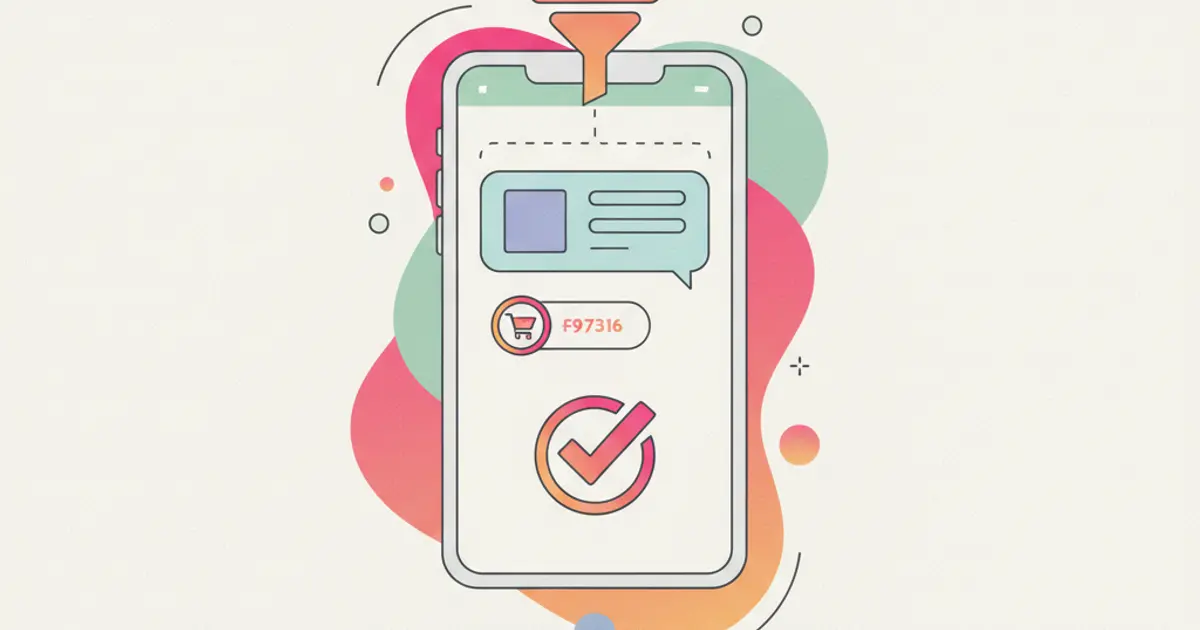
In Italy, 35 million people use WhatsApp every day. It is not a social network, it is not email: it is the way Italians communicate, period. And yet, the vast majority of businesses use it only to respond to clients who write in, treating it as a passive support channel. "Hello, how can I help you?" is the extent of their initiative.
What if WhatsApp could be your most powerful sales channel? Not in an aggressive or spammy way, but as the natural medium for building commercial relationships in 2026. Because your potential client does not want a cold email or an unsolicited phone call: they want a WhatsApp message they can read at their own pace and respond to when it is convenient.
The shift from "WhatsApp for support" to "WhatsApp for sales" does not require being invasive. It requires being smart: automating the right messages at the right time, qualifying leads with an AI chatbot before passing them to the sales rep, and keeping every conversation in the CRM so you never miss an opportunity. Let us see how.
WhatsApp in Italy: The Numbers That Matter
The statistics around WhatsApp usage in Italy are remarkable and they explain why this channel deserves serious attention from any business operating in the Italian market. With over 35 million daily active users, WhatsApp has a penetration rate that no other communication channel comes close to matching.
The engagement metrics are what truly set WhatsApp apart. Messages have a 98 percent open rate, compared to roughly 20 percent for email. The average response time is 90 seconds, compared to 90 minutes for email. These are not marginal differences: they represent an order-of-magnitude improvement in both visibility and speed of communication. When you send an email, four out of five recipients never see it. When you send a WhatsApp message, virtually everyone reads it, and they read it quickly.
WhatsApp Business adoption is growing at approximately 40 percent year-over-year among Italian SMEs, reflecting a growing recognition that this channel has business value beyond customer support. Consumer research consistently shows that 68 percent of customers prefer contacting a business via WhatsApp rather than by phone, a preference driven by convenience, asynchrony, and the comfort of communicating through a familiar interface.
The opportunity for forward-thinking businesses is that most of their peers are not leveraging this channel for sales. They answer incoming messages when they arrive, but they do not proactively use WhatsApp to nurture leads, follow up on proposals, or move prospects through the sales pipeline. This means that the businesses that do adopt WhatsApp as a sales channel gain an immediate competitive advantage: reaching clients on the medium they prefer, with engagement rates that dwarf traditional channels.
From Support to Sales: The Mindset Shift
The traditional WhatsApp model is reactive: the client writes, you respond. This is customer support, and it is valuable, but it is only half of the equation. The evolved model adds a proactive dimension: you initiate conversations at the right moment, in a way that is helpful rather than intrusive.
The distinction between helpful and intrusive is entirely about timing and context. Sending a cold WhatsApp message to someone who has never interacted with your business is spam. Sending a follow-up message to someone who requested a quote from your website three days ago is service. The difference lies in the relationship context: proactive WhatsApp outreach works when it follows an action the contact has already taken: filling out a form, attending a webinar, requesting information, receiving a proposal.
The tone matters as much as the timing. WhatsApp is an inherently conversational, personal channel. Messages that read like marketing copy feel wrong in this context. The most effective WhatsApp sales communication reads like a message from a knowledgeable, helpful person: direct, conversational, and genuinely useful. "Hi Maria, I noticed you downloaded our service catalog yesterday. Would it help if I walked you through which options are best for companies in your industry?" This kind of message gets responses because it demonstrates attention and offers value.
Opt-in consent is both a legal requirement and a practical necessity. Contacts must have given explicit consent to receive messages from your business. Beyond compliance, this requirement actually improves your results: a contact who has opted in is one who has expressed genuine interest, which means your messages land in a receptive context rather than an annoyed one. For a complete understanding of consent requirements, our guide on GDPR and data protection covers the regulatory framework.
Commercial Automations via WhatsApp
Follow-Up Sequences
The highest-value WhatsApp automations are follow-up sequences tied to specific events in your sales process. After sending a proposal, an automatic message can reach out two days later: "Hi, did you have a chance to review the proposal? I am happy to clarify anything." After a meeting, a summary message reinforces the conversation and keeps the momentum alive: "Thanks for your time today: here is a recap of what we discussed and the next steps we agreed on."
For leads that have gone quiet, a gentle re-engagement message can revive dormant opportunities: "It has been a while since we last connected. Has anything changed on your end? I am here if you need anything." These messages are simple, human, and remarkably effective because they arrive on a channel where the contact actually reads and responds. Combined with the automated workflows that trigger them, follow-up sequences run continuously without anyone on your team remembering to send each message manually.
Targeted Campaigns
WhatsApp campaigns allow you to send targeted messages to specific segments of your contact database: existing clients for upsell opportunities, warm leads who have shown interest but have not yet converted, or inactive clients who might be ready for re-engagement. Unlike email campaigns where open rates hover around 20 percent, WhatsApp campaigns achieve near-universal visibility, making them particularly effective for time-sensitive communications.
The key to successful WhatsApp campaigns is compliance with WhatsApp Business policies, which require pre-approved message templates for outbound communications. These templates are reviewed by WhatsApp to ensure they are not spam, which actually works in your favor: the approval process forces you to craft messages that are clear, valuable, and respectful of the recipient's attention.
Campaign tracking gives you visibility into opens, responses, and conversions for each message, allowing you to measure the actual ROI of your WhatsApp sales efforts. Over time, this data reveals which messages resonate with which segments, enabling increasingly precise targeting and messaging.
Transactional Notifications
Beyond sales communication, WhatsApp serves as an excellent channel for transactional notifications that keep clients informed and reduce inbound support requests. Order confirmations, shipment tracking updates, invoice notifications, appointment reminders, and project milestone updates, all delivered through the channel your client checks most frequently.
These transactional messages do more than reduce support volume. They build a communication habit between your business and the client on WhatsApp, which means that when the client has a question or needs something new, their natural instinct is to message you on the channel where you are already talking. This creates a virtuous cycle where transactional communication leads to commercial conversation, and commercial conversation leads to additional revenue.
AI Agent: The Sales Rep That Never Sleeps
The most transformative WhatsApp capability is the AI agent: an intelligent assistant that handles first-line conversations autonomously, around the clock. When a contact sends a message, the AI responds contextually based on CRM data, configured knowledge bases, and the specific instructions you have defined for different types of inquiries.
The AI agent excels at three specific functions. First, it answers frequently asked questions (pricing, availability, service descriptions, business hours) instantly and accurately, eliminating the wait time that causes many prospects to lose interest or contact a more responsive provider. Second, it performs automatic qualification by asking the right questions to understand the contact's budget, timeline, specific needs, and decision-making process. These are the same questions your sales rep would ask, but the AI asks them immediately rather than during a call that might happen days later.
Third, and most importantly, the AI knows when to hand off to a human. When a conversation reaches a point that requires judgment, negotiation, or emotional intelligence, the AI seamlessly transfers the conversation to the appropriate sales rep, along with a complete summary of everything that has been discussed. The rep picks up the conversation with full context, as if they had been part of it from the beginning.
The 24/7 availability this provides is not a luxury: it is a competitive necessity. The lead who fills out a form at 11 PM and immediately receives a WhatsApp message acknowledging their interest has a fundamentally different experience than the lead who submits the same form and hears nothing until the next morning. By the time your office opens, the first lead has been qualified, their questions have been answered, and they are ready for a substantive conversation with a sales rep. The second lead has spent twelve hours wondering whether anyone received their inquiry. For more on how AI transforms CRM capabilities, our comprehensive guide covers the full range of possibilities.
CRM Integration: Every Message in the Right Context
WhatsApp as a sales channel only works if every conversation is connected to the rest of your business data. When a WhatsApp message arrives, the CRM should immediately link it to the existing client or lead profile, showing the full history: previous conversations, deals in progress, projects, invoices, notes, and every other touchpoint across every channel.
This integration means that when your sales rep opens a conversation, they are not just reading a WhatsApp thread in isolation. They see the complete relationship context: who this person is, what they have purchased before, what deals are in progress, what their payment history looks like, and what their last five interactions across all channels contained. This context transforms a simple message exchange into an informed, personalized conversation that makes the client feel understood and valued.
Automatic assignment routes incoming messages to the sales rep who already manages that client relationship. The client does not have to explain who they are or repeat information from previous conversations: the right person receives the message with all the context already visible. For messages from unknown numbers, the CRM automatically creates a new lead, capturing the conversation from the very first message and beginning the qualification process immediately.
AI-powered tagging and categorization adds another layer of intelligence. The AI reads each conversation and automatically labels it (product inquiry, support request, complaint, re-engagement) so your team can quickly prioritize their message queue and your reporting dashboards can track the types of conversations happening across the channel.
In practical terms, the gap between a business number used by one sales rep and a channel run by a team comes down to three things: a shared inbox with conversation assignment, approved message templates, and a history that stays with the company when the person changes. If you are still deciding how to set the channel up before writing any automation, the available functions are summarised on the business WhatsApp for teams page.
WhatsApp Metrics: Measuring the Sales Channel
You cannot optimize what you do not measure, and treating WhatsApp as a serious sales channel means tracking it with the same rigor you apply to email, phone, and in-person sales activities. The core metrics start with conversation volume (messages sent and received), which establishes your baseline of channel activity.
Response rate measures how many contacts actually reply to your outbound messages. A high response rate confirms that your messaging is relevant and well-timed; a low rate suggests that you need to rework your templates, targeting, or timing. Response time measures how quickly your team reacts to inbound messages, which is critical because the speed advantage of WhatsApp only works if your side of the conversation is equally fast. If it takes your team six hours to respond to a WhatsApp message, you are negating the channel's primary advantage.
The metric that matters most is conversion: how many WhatsApp conversations turn into actual deals. This requires attribution tracking that connects the initial WhatsApp interaction to the eventual sale, even if the deal went through multiple stages and channels along the way. When you can measure attributed revenue (the total revenue generated from deals that originated through or were significantly influenced by WhatsApp conversations) you can calculate the true ROI of the channel and make informed decisions about how much to invest in it.
A comparison with other channels puts WhatsApp performance in strategic context. When you see that WhatsApp generates higher response rates, faster conversions, and lower cost per acquisition than email or phone outreach, the case for increasing investment in the channel becomes clear and data-driven. A dedicated dashboard showing all WhatsApp KPIs alongside your other sales metrics, integrated seamlessly with your CRM's broader reporting capabilities, gives you the visibility to manage WhatsApp as the strategic asset it deserves to be.
For businesses still managing leads across multiple disconnected tools, integrating WhatsApp into the CRM is often the single change that produces the most dramatic improvement in lead response time and conversion rates.
Share this article
Written by
Luca Bosso
Founder of Flusia
Related articles
WhatsApp Multi Agent: One Shared Number for Your Team
How several people can answer from the same business WhatsApp number: chat assignment, internal notes, roles and a shared history inside your CRM.
CRM Newsletters: How to Send Your First Campaign
How to send a newsletter from your CRM: authenticate your sending domain, build a segment, write and test the email, schedule it and read the results.
Integrated Team Chat: Stop Using Separate Messaging Apps
Discover why an integrated team chat in your CRM eliminates message fragmentation and improves collaboration by linking conversations to deals and projects.