Why 79% of Italian SMEs Don't Use a CRM (and What They're Missing)
79% of Italian SMEs don't use a CRM. Discover the 5 most common objections, how much NOT having a CRM costs, and when to start.

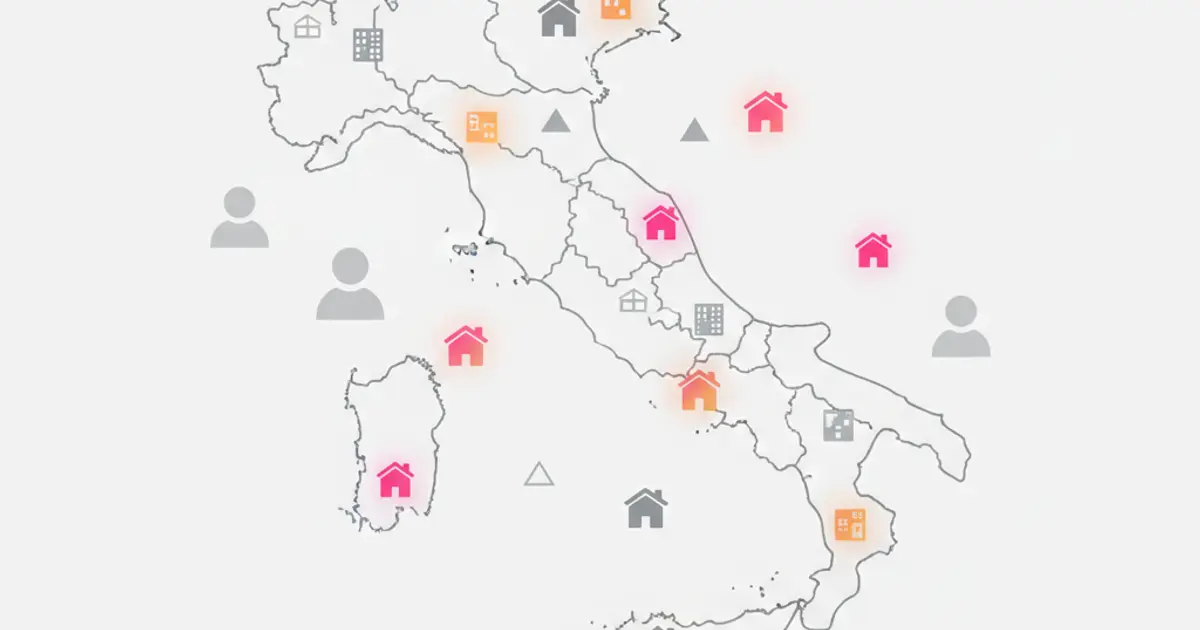
There is a statistic that should give you pause: according to ISTAT surveys and the Politecnico di Milano Digital Innovation Observatory, roughly 79 percent of Italian SMEs do not use a CRM. Not an advanced CRM, not an AI-powered CRM — no CRM at all. They manage clients, sales, and business relationships with Excel, paper planners, email, and the memory of their sales reps.
The curious part is that these same companies invest in websites, social media marketing, trade shows, and events to generate new contacts. Then those contacts end up in a spreadsheet where nobody follows up. It is like filling a bucket with holes: you invest to acquire customers and then lose them due to lack of organization.
If you are part of that 79 percent, this article is not here to judge you. It is here to show you what companies without a CRM are missing, dismantle the most common objections, and help you figure out if now is the right time to change your approach. Spoiler: if you are reading this article, it probably is.
The Data: Digital Italy in 2025-2026
Italy's digital transformation has made genuine progress in several areas. Electronic invoicing is nearly universal, ERP adoption among medium enterprises is healthy, and e-commerce has grown dramatically since 2020. But CRM adoption remains stubbornly low compared to the European average, particularly among companies with fewer than fifty employees.
The contrast is striking. Countries like the Netherlands, Denmark, and Germany report CRM penetration rates above sixty percent even among small businesses. Italy hovers around twenty percent, placing it among the lowest in Western Europe. The Politecnico di Milano Digital Innovation Observatory has tracked this gap for years, and the trend line shows improvement — but far too slowly.
Here is what makes this data genuinely significant: research from Nucleus Research consistently finds that companies using a CRM grow on average 29 percent more than comparable companies without one. That is not because the CRM itself generates revenue — it is because the organizational discipline it imposes prevents the kind of leaks that silently drain growth. Leads that get followed up. Proposals that get sent on time. Clients that feel cared for because someone actually tracked the relationship.
The Italian paradox is that the country produces world-class products and services, yet lags in the commercial management tools that would help those products reach more customers. Product excellence is undermined by organizational informality, and the result is growth that plateaus not because of market limitations but because of internal inefficiency.
The 5 Most Common Objections (and Why They Don't Hold Up)
1. "It costs too much"
This is the most frequent objection, and it is based on an outdated understanding of CRM pricing. A decade ago, CRM implementations were enterprise projects costing tens of thousands of euros with long integration timelines. Today, a modern CRM for a five-person team costs roughly the same as a team lunch — per month.
The real question is not what a CRM costs, but what not having one costs. When a sales rep spends twenty percent of their time on administrative tasks that a CRM would automate — data entry, searching for contact information, preparing reports, sending follow-up reminders — that is twenty percent of their salary paying for busywork instead of selling. For a team of five, that lost productivity almost certainly exceeds the annual CRM subscription cost. If you are curious about the hidden costs of sticking with spreadsheets, the comparison is revealing.
Modern CRMs are also scalable by design. You do not need to buy the enterprise package on day one. Start with the features you need, add capabilities as your business grows, and pay only for what you actually use. The investment grows with your revenue, not ahead of it.
2. "We don't have time to implement it"
This objection contains a beautiful irony: you do not have time to get organized because you are too busy being disorganized. The hours your team spends searching for contact details, reconstructing deal histories from email threads, and manually preparing reports are exactly the hours that a CRM would give back.
The perception that CRM implementation takes months comes from the era of on-premise enterprise software. A modern cloud-based CRM gets you operational in one to two days, not weeks or months. You import your contacts, configure your pipeline stages, and start working. The fine-tuning — custom fields, automations, permissions — happens incrementally as you use the system, not as a prerequisite before you can start. Our guide on configuring your CRM in the first 30 days walks through the realistic timeline step by step.
3. "Our business is different, a CRM won't fit"
Every industry believes it is unique, and every industry is right — to a point. A construction company's sales process is different from a marketing agency's, which is different from a law firm's. But at the fundamental level, every business has clients, sales interactions, and relationships that need to be tracked. The specifics differ; the need does not.
Modern CRMs are deeply customizable. Pipelines, fields, stages, automations, and workflows can be configured to match virtually any industry's process. Whether you are a marketing agency, a professional firm, an e-commerce business, or a consultant or freelancer, the system adapts to your reality — not the other way around.
4. "My sales reps won't use it"
This is a legitimate concern, and it deserves an honest answer: adoption is the single biggest risk in any CRM implementation. But the solution is not to avoid the tool; it is to choose the right one. The CRMs that fail at adoption are the ones that create work for the sales rep without giving anything back. If the rep spends ten minutes entering data and gets nothing in return, of course they will stop using it.
A well-designed CRM is mobile-first, allowing the rep to update a deal from their phone in thirty seconds between meetings. It provides immediate value back to the user — showing them their prioritized lead list, automating their follow-up reminders, drafting their emails — so using the CRM saves time rather than consuming it. When the system helps the rep sell more effectively, adoption stops being a problem and becomes a natural behavior.
5. "We've always done it this way and it works"
Does it work, or does it survive? There is a meaningful difference. When you do not have data, you cannot see what you are losing. How many leads were never contacted after the first touch? How many proposals were sent late because nobody tracked the deadline? How many clients left because they felt forgotten? Without a CRM recording this information, these losses are invisible — which makes them easy to ignore but impossible to recover.
What works with ten clients often collapses at fifty or a hundred. The informal systems — the mental notes, the email threads, the conversations in the hallway — cannot scale. Growth requires structure, and the companies that wait until the chaos becomes unbearable before implementing a CRM pay a much higher price than those that build the foundation early.
How Much NOT Having a CRM Costs: The Numbers
The cost of not using a CRM is not a single line item on your profit and loss statement. It is a collection of inefficiencies that individually seem minor but collectively represent a significant drag on performance.
Lost leads are the most obvious cost. Research from InsideSales.com shows that 35 to 50 percent of leads are never contacted after the first interaction. Not because the sales team does not care, but because without a system to track and remind, contacts simply fall through the cracks. If your business generates a hundred leads a month and forty of them never get a follow-up, the revenue you are leaving on the table is substantial.
Wasted time is the second major cost. The average sales rep in a company without a CRM spends roughly thirty percent of their workday on administrative tasks: data entry, searching for information, preparing reports, managing their own follow-up system. For a team of five sales reps, that is the equivalent of 1.5 full-time salaries going toward busywork instead of revenue generation.
Lost data is the cost that hurts most when it happens. When a sales rep leaves the company, they take their contacts, their relationship history, and their institutional knowledge with them — because all of it lived in their personal email, their phone contacts, and their head. A CRM ensures that client relationships belong to the company, not to any individual employee.
And then there are the wrong decisions. Without data on which marketing channels produce the best leads, which products have the highest margins, or which sales activities generate the most revenue, you are investing your budget based on intuition rather than evidence. Sometimes intuition is right. Often, it is expensive.
Transformation Stories: From Chaos to Order
The transformation when a company moves from informal systems to a proper CRM is often dramatic. Marketing agencies that made the switch report closing approximately 40 percent more deals within six months — not because they generated more leads, but because they stopped losing the ones they already had. The simple act of systematic follow-up, enabled by CRM reminders and automated workflows, turned dormant leads into active conversations.
Professional firms describe the relief of never forgetting a deadline again, and report a 60 percent reduction in status-update phone calls from clients who can now check progress through a client portal. E-commerce companies that centralized orders and customer service in their CRM watched their Net Promoter Score climb from 6 to 8.5 as response times dropped and customer interactions became more consistent.
The common lesson across these stories is that the biggest benefit is not technological — it is organizational. The CRM does not make people smarter or more talented. It makes the organization more reliable, more consistent, and more capable of delivering on the promises that individuals have always wanted to keep but lacked the systems to support.
The Right Time to Start
If you have more than five active clients, a team larger than two people, and leads coming from multiple channels, you have already reached the point where informal systems start to crack. The signals are subtle at first — an occasional missed follow-up, a client who has to ask twice for an update, a deal that slips through because nobody tracked the proposal deadline — but they accumulate.
The mistake of waiting is that the longer you delay, the more data you lose and the higher the eventual migration cost. Every month without a CRM is a month of client interactions that are not recorded, insights that are not captured, and patterns that are not visible. When you eventually make the switch, you start from zero instead of starting from a rich history of data.
The good news is that starting small is perfectly valid. You do not have to implement every feature on day one. Import your contacts, set up your pipeline, and start tracking deals. Add email marketing when you are ready. Activate WhatsApp integration when the team is comfortable. Build custom dashboards when you know which metrics matter most. The system grows with you.
And with modern CRMs offering free trials with no contractual lock-in, there is genuinely no risk in trying. You invest a few hours to set up and explore, and either it transforms your business or you walk away having lost nothing but a morning. Given that the upside is a 29 percent growth advantage, those are odds worth taking.
Share this article
Written by
Flusia Team
Related articles

Your CRM Is a Spreadsheet? Here's Why You're Limiting Growth
Understand the real cost of managing clients in Excel and when it is time to switch to a proper CRM for your growing SME.
How to Choose the Right CRM for Your SME: Complete 2026 Guide
A practical guide to choosing the right CRM for your Italian SME in 2026: features, pricing models, red flags and what actually matters.
How to Configure Your CRM in the First 30 Days: Complete Checklist
A step-by-step checklist to set up your CRM properly in the first 30 days: data import, pipeline, automations and team onboarding.