How to Follow Up on a Quote and Get an Answer
How to follow up on a quote without nagging: when to write, what each of the three contacts should say, how to close a stalled proposal and what to record.

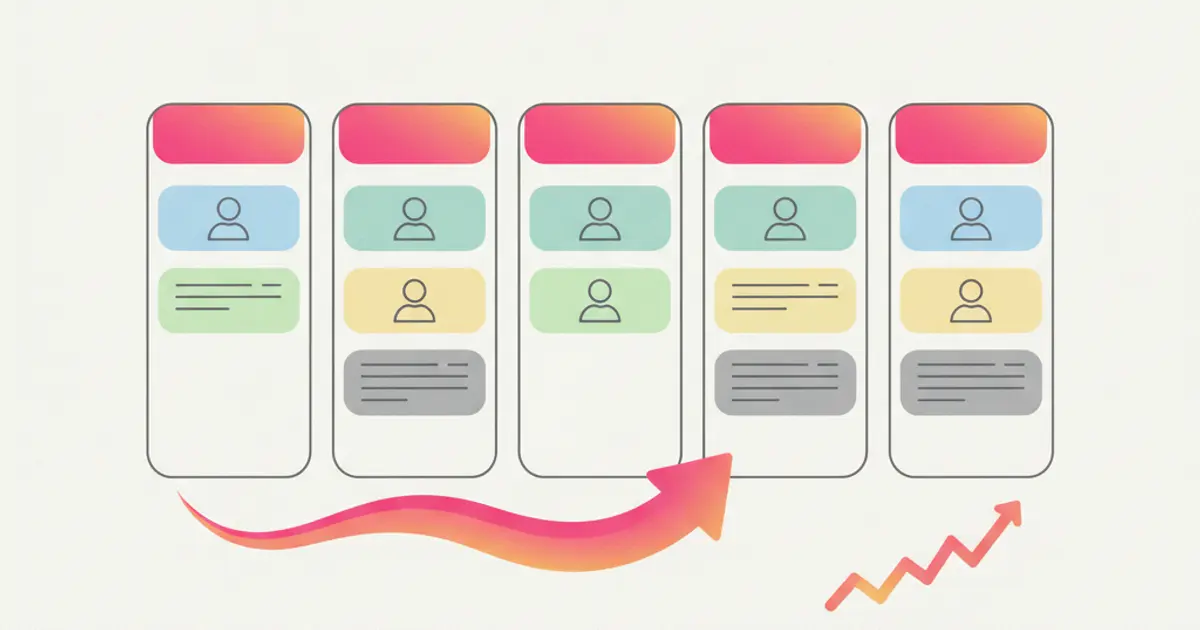
Following up on a quote takes three spaced contacts, each with different content: the first checks that the document arrived and the scope is clear, the second brings new information, the third asks for an explicit decision and closes the case one way or the other. Send the first two or three working days after the quote goes out, the others roughly a week apart. A quote without follow up does not stay open: it closes on its own, with a no that nobody tells you about.
If today you notice stalled proposals only when you tidy up your inbox, and you cannot say which offers are still alive, by the end of this guide you will have a contact schedule you apply the same way every time, and a way to know at any moment which quotes are waiting for an answer.
What you need before you start
- The quote you sent, with a number and a validity date. Follow up leans on that date: with no written expiry you have no natural reason to write again. If the document you send lacks these elements, fix the structure first: the guide on how to write a professional quote covers it.
- The name of the person who decides, not just the company address. A reminder sent to info@example.com reaches nobody in particular.
- The exact send date and the date of the last contact. Those two figures tell you when it is time to write again.
- One single place where open quotes are visible, with their status. As long as the list lives in the memory of whoever wrote the offer, follow up depends on who remembers.
- One or two useful pieces of news for the second contact: a slot that has freed up, a similar job just delivered, a condition that holds until a given date.
How to follow up on a quote, step by step
Record the send date the moment the offer goes out. Not at the end of the day: at that moment. With a CRM the date stays attached to the deal along with the document; with a spreadsheet, add the row before you close the email. From here you have the starting point to count days from.
Set the three reminders straight away. The first at two or three working days, the second seven days after that, the third seven days later and in any case before the expiry written on the document. You will see all three appointments in your calendar before the client has even opened the file, and that is what turns follow up into a procedure rather than a personal initiative.
Send the first contact as a check, not as a chase. Two lines: you confirm the send, ask whether the scope described matches what you discussed, and offer to go through one specific line item together. For example: "I sent the proposal for the members area rebuild on Monday. Does the scope of the second phase work for you, or shall we go through it together?" The answer to that question tells you whether the quote is alive far better than "did you get a chance to look at it?".
On the second contact bring something that was not there before. A start date that has opened up, an operational detail that simplifies a phase, a reference to a job of the same kind just finished. A second message with no new content is just a reminder, and reminders are ignored at no cost. By this point most live deals have started moving again.
On the third contact ask for a decision, and offer the way out. This is the shortest of the three: you note that validity expires, ask whether to proceed or to park the case for now, and say explicitly that a no is fine. For example: "The proposal expires on Friday. If the project is postponed just tell me, I will update the status and come back to you later; if we go ahead, we can start on Tuesday." The wording that grants the no is the one that gets the most replies, because it removes the cost of disappointing you.
Record the outcome, always, even when the outcome is silence. Update the status to won, lost or postponed, with one line on the reason. A few months from now you will be able to count how many offers you lose on price and how many on timing: two different problems, corrected in different ways.
| Contact | When | What it says | What you get |
|---|---|---|---|
| First | 2-3 working days after sending | checks the scope is clear | you know whether the offer was read |
| Second | 7 days after the first | brings new information | stalled deals start moving again |
| Third | 7 days after the second, before expiry | asks for a decision, grants the no | the case closes one way or the other |
| Revival | 60-90 days after a "postponed" | starts from the reason for the delay | you recover offers that were not dead |
When the client does not reply at all
Silence after three contacts is almost never a definitive no: usually the person who would answer does not yet have the authority to do so, or the project has dropped in priority for reasons unrelated to you. Change channel once, and once only: if you wrote by email, try a short call or a WhatsApp message if the client already uses it with you.
After the third contact with no reply, move the deal to postponed with a revival date two or three months out, and stop writing. Going further does not improve your odds of closing, and it reduces the odds of being called back when budget frees up.
When the client says "we are thinking about it"
This is the most common answer and it needs translating, because it hides three different situations: an internal approval is missing, the price is above budget, or the project is no longer a priority. You will not find out with another generic email: you find out with an alternative question, such as "are you deciding whether to do it now, or whether to do it with us?".
The answer tells you what to do. If the doubt is about timing, offer a phased start. If the doubt is about scope, send a revision with one phase less and the matching price, as a new numbered document, not as a discount on the old one. If the doubt is about the decision maker, ask who else needs to see the proposal and offer half an hour to present it to that person too.
When the quote expired weeks ago
An expired offer is not chased: it is replaced. Rewrite the document with a new number and date, updating prices and lead times to what you can commit to today, and send it saying that the previous proposal is superseded. It reopens the conversation without making the wait weigh on anyone, and it puts you back in a position to set the three contacts again.
If the expired quote was the third for the same client with no decision ever reached, the problem is not follow up but qualification upstream: it is worth reviewing how contacts come in and progress, which is the subject of the guide on how to manage leads without losing them.
Alternative method: automatic reminders instead of a calendar
Setting reminders by hand works while open offers are few. Above ten or so it becomes the task that gets dropped first in busy weeks, which is exactly when follow up pays most.
The alternative is to let reminders come from the deal status: when the quote moves to sent, an automation creates the three tasks at the intervals you decided and assigns them to whoever owns the client. In Flusia this is set once in the automations, and from then on every offer sent carries its own contact schedule; the deal record keeps document, status and message history together. If you do not yet have a single place where open offers are visible, the quotes page shows how they are organised, and the sales pipeline guide explains which statuses are actually needed.
Common mistakes
Writing "just a gentle reminder". The phrase signals that the message contains nothing new, and it teaches the client not to open the next ones. Every contact needs a reason of its own: a check, a piece of information, a decision to make.
Treating a price cut as a follow up tool. Lowering the price because the client is quiet ties waiting to a financial gain: next time they will wait on purpose. If scope needs reducing, reduce the scope and let the price follow, in a new document that explains it.
Leaving deals open with no outcome. A list full of quotes nobody closes loses its value: you no longer know which are alive and you stop looking at it. Won, lost or postponed with a date: one of the three always goes in.
How long it takes and what comes next
Setting the method up takes about an hour: half an hour for the three base texts you will reuse, half an hour to define statuses and reminders. From there each contact costs two or three minutes, spent on offers already made rather than on contacts still to find.
The natural next step is measuring the outcome: once every quote has a final status, you can count the acceptance rate by type of work and by period, and see where deals are lost. If the sales team is more than one person, the step after that is linking outcomes to variable pay, as covered in the guide on how to calculate sales commissions.
Frequently asked questions
How many days after sending should the first follow up go out? Two or three working days. Earlier and you risk arriving before the document has been opened, wasting the message; later than a week and the proposal has already slipped under other priorities. The interval matters less than keeping it constant: a fixed gap makes the contact a procedure rather than pressure.
How many times can you chase without becoming a nuisance? Three contacts a week apart read as normal commercial practice, provided each has different content. What annoys people is not the number of messages but their sameness: the same question three times becomes pressure.
Email, phone or WhatsApp for chasing a quote? The channel the client has already replied on at least once. Email leaves a written trace and suits the first and third contact; a call works for the second, when there is information to explain. WhatsApp is for clients who already use it with you for work, and there the messages should stay visible to the whole team rather than on one person's phone.
What should the last message before closing the case say? That the proposal's validity is expiring, that a no is perfectly fine, and that you will then update the status and get back in touch later. Granting the no explicitly brings more replies than any urgency formula.
Share this article
Written by
Luca Bosso
Founder of Flusia
Related articles

Quoting Software: How to Choose the Right One
What quoting software has to do: reusable templates, one price list, statuses and expiry dates, plus how to move across from documents without stopping work.

How to Get a Quote Signed Online
How to get a quote accepted and signed online: signature links, the client portal, signed PDFs sent back, and what to do when a committee decides.
How to Write a Professional Quote
How to write a quote a client actually understands and accepts: required details, how to structure line items, validity, payment terms and follow up.