How to Write a Professional Quote
How to write a quote a client actually understands and accepts: required details, how to structure line items, validity, payment terms and follow up.

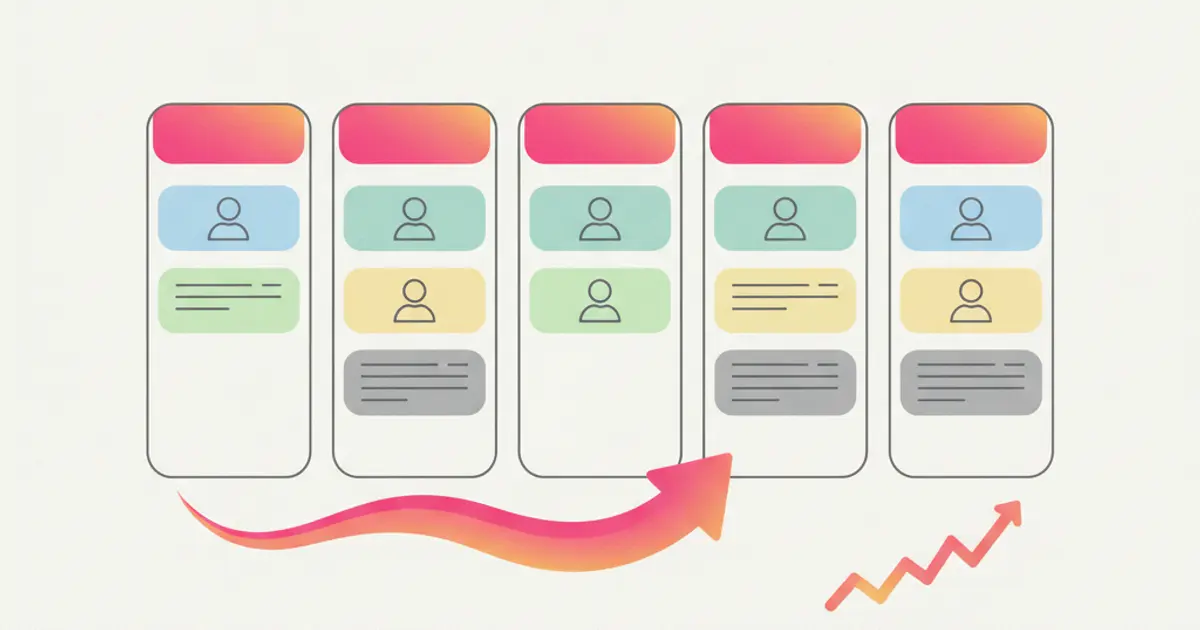
A professional quote always contains four blocks: who you are and who the client is, what you will do and what is excluded, what it costs with the line items separated, and how long the offer stands together with payment terms. You write them in that order because that is the order the client reads them in: first they check whether you understood the problem, then they look at the price. A quote that opens with a total, without describing the scope, turns into a negotiation about price instead of a conversation about value.
If every quote you send today is rewritten from scratch, with different line items each time and no record of who replied, by the end of this guide you will have a fixed structure you can fill in within minutes and a way to know which proposals are still open.
What you need before you start
- The client's full details: company name, address, VAT or tax number, and the name of the person who will decide. A quote addressed to a company but to nobody in particular stays in the inbox of whoever received it.
- The agreed scope, even if it only exists as notes taken after the call. If it is not clear to you, it will not be clear in the document.
- A price list or reference prices, meaning what your recurring items cost: the day rate, the module, the monthly fee. Recalculating from scratch every time is the main reason quotes end up inconsistent with each other.
- The standard terms you apply: delivery times, payment method and terms, what happens when the client asks for changes mid project.
- A sequential number and a date. You need them to find the document again, and the client needs them to refer to it when replying.
| Block | What it contains | Why it matters |
|---|---|---|
| Header | your details and the client's, number, date | makes the document citable and filable |
| Subject | the client's problem in two lines | shows you listened |
| Scope of work | what you will do, item by item | moves the discussion from price to content |
| Exclusions | what is not included | prevents the free request a month later |
| Economics | amounts per item, total, tax | makes the price verifiable |
| Terms | validity, timing, payment | puts a deadline on the decision |
How to write a quote, step by step
1. Write the subject line using the client's own words. Open with two lines describing the problem to solve, not the service you sell: "reorganising the client records currently split across three files" says more than "organisational consulting". At this point the reader already knows the document is about them.
2. List the activities one per line, each starting with a verb. Every item should describe an action and a result: "set up the client database and import the 900 existing contacts". Avoid container items such as "miscellaneous work": those are the first ones a client cuts, because they cannot tell what they are removing.
3. Write the exclusions paragraph. Two or three lines stating what is not included: training beyond the first session, content to be produced, third party licences. It is the most uncomfortable paragraph to write and the one that saves you the most expensive argument.
4. Put amounts next to the items, not only at the bottom. A standalone total is not negotiable: either it works or it does not. Separate line items let the client choose what to postpone, and let you close a reduced job instead of losing the whole thing. Always state whether amounts exclude tax.
5. State how long the offer stands and how payment works. An expiry date, thirty days for example, and the payment structure: deposit on signature and balance on delivery, or a monthly fee. Without an expiry date the quote stays open forever, and "we are still thinking about it" becomes a final answer.
6. Reread the document as the person who has to get it approved. In most companies the person you talk to does not decide alone: your quote will be forwarded to an owner or a manager who was not in the meeting. If the document does not explain itself, that is where it stops.
7. Send it and record the date. By the end of this step you should know, without searching, which quotes you sent in the last thirty days and which are still unanswered. If that information currently lives in your mailbox, the practical part is covered in the guide on managing quotes without spreadsheets.
Fixed price, unit price or retainer
The type of work changes the shape of the document, and picking the wrong shape is what makes a quote hard to compare.
Fixed price. A single amount for a defined outcome. It works when the scope is clear and finite. Here the exclusions paragraph is not a detail: it is what holds the fixed price up.
Unit price. A rate per unit against an estimated quantity: the day, the hour, the item. Use it when the quantity depends on factors you do not control. Always include an estimate of the quantities and a ceiling above which you requote, otherwise the client reads only the unit rate and expects the lowest possible total.
Retainer. A recurring amount for an ongoing service. Specify what is included each month, the minimum term and the notice period. A retainer without a scope becomes unlimited support.
Mixed. The most common combination in services: a fixed price for setup plus a retainer for ongoing work. Keep them separate in the document, with two distinct totals, because they answer two different decisions.
Quotes for an agency or a firm with several roles
When several people with different rates work on the job, the quote has to answer one more question: who does what. Group the activities by phase rather than by person, and state the days planned for each phase. Clients do not buy hours, they buy completed phases.
If you run several clients in parallel, the hard part is not writing the individual document but knowing at any moment how many proposals are open and for what value. That is the same data that feeds your sales pipeline: a quote you sent is a deal in a specific stage, not a file in a folder. Agencies working project by project will find the full picture in the guide on client and project management for agencies.
Alternative method: start from a template and a price list
Writing every quote from scratch is why sending one slips by days. The alternative is to build, once, a template with the fixed blocks already written (header, standard exclusions, terms, validity) and a price list of your recurring items.
From there a quote becomes a selection: pick the items, adjust the quantities, personalise the subject. When that work sits in the same system where your clients and deals live, the document is created from the client record and stays attached to it: that is how quotes in Flusia work, where an accepted offer stays linked to the client and moves on to invoicing through the Fatture in Cloud integration.
The benefit is not cosmetic. A single template makes quotes comparable with each other, and comparable quotes let you see which items get accepted and which ones are always cut.
Common mistakes that lose the work
Sending only the price by email. A number written in the body of a message cannot be forwarded to a partner, cannot be filed and has no expiry. The attached document is not a formality: it is what makes the proposal portable inside the client's company.
Leaving out the validity date. With no expiry the quote does not ask for a decision, and when no decision is requested the answer arrives whenever it arrives. Validity is the only element that puts time back into the deal.
Forgetting the follow up. Most proposals do not get a no: they get silence. A reminder at five and at fifteen days after sending is the difference between a closed deal and a forgotten one. If your contact list is a mess, sort out how you manage leads before worrying about follow ups.
How long it takes and what comes next
The first time, writing the template and the price list usually takes half a day. From the second quote onwards a standard document takes ten to fifteen minutes, and the time moves to where it belongs, which is the descriptive part.
Now that the document exists, the natural next step is what happens after it: record the outcome of every proposal and keep the sales pipeline current. If you work with agents or referrers, an accepted offer is also the starting point for calculating commissions.
This guide covers the commercial structure of the document, not its tax and contractual implications: for tax treatment, stamp duty where it applies and how binding an offer is in your country, check with your accountant or a legal advisor.
Frequently asked questions
Is a signed quote already a contract? It depends on the content and on how it was accepted: an offer accepted in writing can be binding between the parties, which is exactly why written terms and exclusions matter as much as the price. For high value work or agreements with unusual clauses, have a lawyer review the document before you adopt it as a template.
How long should a quote be? As short as it can be while staying clear. One page is enough for a recurring service; a structured project needs two or three, with the phases separated. Beyond five pages the document does not get read: people look at the last line.
Should I show a discount or lower the list price? Show the discount on its own line, with the reason for it (volume, term length, upfront payment). A discount with no stated reason teaches the client that your price list is not real, and the next negotiation starts from there.
How do I know whether a quote is too expensive or too cheap? By looking at the acceptance rate across enough proposals, not at the individual case. If almost everything you send is accepted, the price is probably below the perceived value; if almost nothing is, the problem may be the price but it may equally be an unclear scope. The figure is only useful in aggregate, which is why recording the outcome of every quote pays off.
Share this article
Written by
Luca Bosso
Founder of Flusia
Related articles

Quoting Software: How to Choose the Right One
What quoting software has to do: reusable templates, one price list, statuses and expiry dates, plus how to move across from documents without stopping work.
How to Get a Quote Signed Online
How to get a quote accepted and signed online: signature links, the client portal, signed PDFs sent back, and what to do when a committee decides.
How to Follow Up on a Quote and Get an Answer
How to follow up on a quote without nagging: when to write, what each of the three contacts should say, how to close a stalled proposal and what to record.