How to Win Back Inactive Customers
How to win back inactive customers in six steps: how to define them, how to split them by value, what the first message says and when to stop chasing.

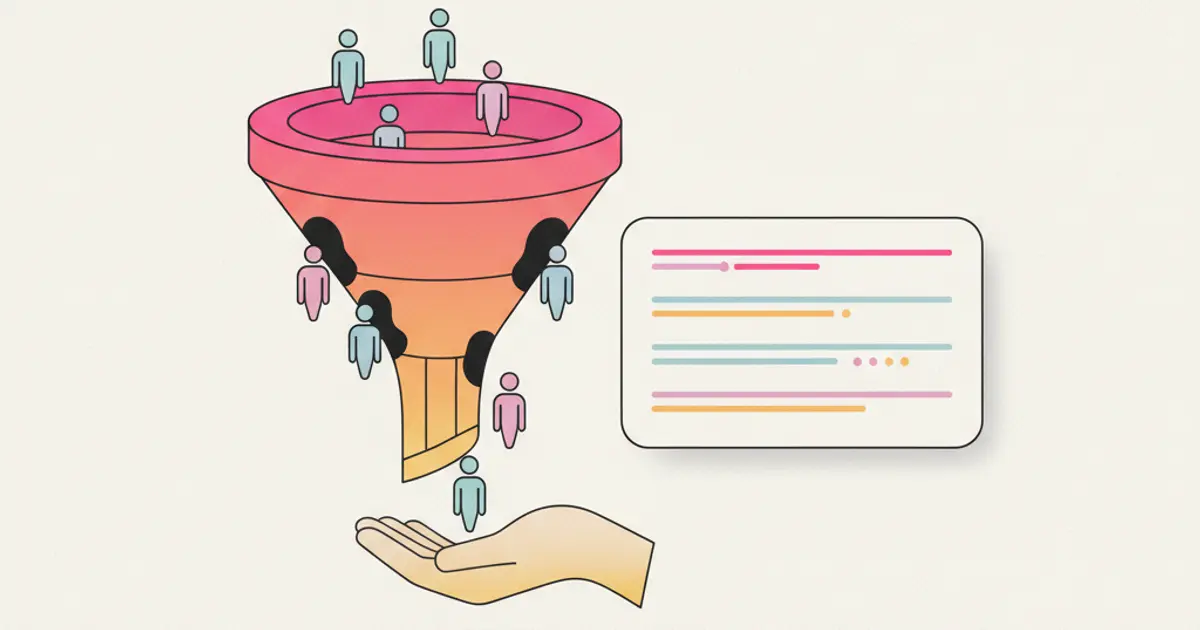
To win back inactive customers, start from a written definition of inactivity (for example no purchase and no contact in the last twelve months), pull the list out of your CRM or out of whatever sheet holds your customer data, split it into bands by how much each customer used to spend, and send each band a different message that starts from the reason the relationship stalled rather than from a discount. The first contact asks whether something has changed and gives a concrete reason to reply; the second, seven to ten days later, brings new content. Anyone who has not answered after two messages gets archived with a revival date, instead of sitting in a list nobody looks at.
If today you have the feeling that your database holds hundreds of customers who used to buy and then vanished, but you cannot say which ones or since when, by the end of this guide you will have a concrete list, a rule for splitting it, and a contact sequence you can repeat every quarter exactly the same way.
What you need before you start
- A written definition of an inactive customer, with a number of months and a criterion (no order, or no order and no conversation). The number varies by sector: a consumables supplier may call a customer inactive after four months, an equipment installer after three years. Without a written threshold every person on the team will use their own, and the list will never be the same twice.
- The list of customers with two dates: last purchase and last contact. They are different figures and you need both: a customer who has not ordered in a year but wrote last week is not inactive, they are undecided.
- The value of what each customer bought in the past, even roughly. It decides who deserves a phone call and who gets an email.
- A clean database, with no duplicates and with valid addresses. Reviving from a dirty list means writing to closed mailboxes and damaging your sending reputation: if the data is messy, fix it first, as described in the guide on how to manage leads without losing them.
- A check on consent for commercial messages, for the channel you intend to use. This is the point that derails most win back campaigns, and it has its own section further down.
How to win back inactive customers, step by step
Write the definition of inactivity before you look at the data. Set the threshold in months starting from your typical repurchase cycle: if customers reorder roughly every three months, six months of silence is already a signal. Fix the rule in one line and put it somewhere the whole team can see. From here you have an objective criterion, and the argument about who counts as inactive is over.
Pull the list and split it into three bands by past value. Not every dormant customer is worth the same effort. Sort by total spend over the last three years and cut the list into three bands: the biggest spenders, the middle, and the occasional buyers. You will almost always find that a minority of names accounts for most of the lost revenue, and that is where people's time should go.
Recover the reason for the stop, where one exists. Before writing, open the records of the top band and read the last activities: a quote never closed, a complaint, a change of contact person, a project postponed. A message that restarts from the right reason gets answers; one that ignores an open complaint burns them. If the records are empty, make a note: that is the first thing to fix after the campaign.
Pick the channel based on how that customer used to talk to you. Whoever ordered by phone should get a call, whoever wrote on WhatsApp should be reached there, whoever always used email gets an email. The habitual channel has a higher reply rate than any new one, because your name is already recognisable in the history.
Send the first message as a question, not as an offer. Two or three lines: you say you noticed you have not worked together in a while, ask whether their needs have changed, and mention one concrete useful thing. For example: "Hello Marta, I see the last order for your Cesena site was back in March. Has something changed on the supplier side or in your volumes? In the meantime we have added Saturday deliveries, happy to describe them in two lines." At this point you have asked something that is easy to answer even with a no, and a no is useful information.
Set the second contact seven to ten days later, with different content. The second message does not repeat the first: it brings something new (a condition valid until a given date, a product that did not exist before, a similar case just solved) and closes with an explicit request for an answer, including a negative one. After the second contact with no reply, you stop.
Close the loop on every name, always. Whoever replies with interest goes back into the active deal list with a status and a next step; whoever says no gets a status change with the reason written down; whoever stays silent is archived with a revival date six or twelve months out. The value of the campaign is not in day one replies but in this clean up: next time round you will start from a much shorter and much truer list.
| Band | Who is in it | Suggested channel | Contacts planned |
|---|---|---|---|
| High | the 10-20% of customers who generated most revenue | phone call, then a summary email | 2, with a named person calling |
| Middle | regular but not major buyers | personal email or WhatsApp | 2 messages, 7-10 days apart |
| Low | occasional or one off buyers | email campaign to the segment | 1 send, plus a second only to openers |
Variant: winning them back by email, with a campaign to a segment
For the low band a phone call is not sustainable and one to one email is not either. Here you build a segment from the rule you wrote (last purchase beyond the threshold, commercial consent in place, valid address) and send once, with a subject line that tells the truth: "We have not spoken in a year" works better than "Unmissable offer", because it is true and the reader recognises it.
Keep the send small. Mail two or three hundred addresses at a time rather than three thousand at once: lists that have been dormant contain closed mailboxes, and a mass send produces bounces that hurt delivery of everything after it. If you run the send from your CRM the segment updates itself, and anyone who replies leaves the list without you touching it; the guide to email marketing from the CRM covers how to set up segments and sends, and the newsletter page shows how lists and reports are organised in Flusia.
Variant: winning them back on WhatsApp
WhatsApp is only for customers who already used it with you for work: writing to a personal number for the first time after a year of silence is the fastest way to get blocked. With those who did write there, a short message works better than email, because it lands in the same place as the previous conversations and the customer sees the history straight away.
Two practical rules: write during working hours, and sign with your name and company, because after months your number may no longer be saved. And make sure replies reach a company inbox the whole team can see, not one person's phone: if whoever owned that customer is on holiday, the reply is lost. Organising the channel across several operators is the subject of the guide on WhatsApp as a sales channel.
Variant: calling back your highest value customers
For the top band the phone call is still the most effective tool, provided you prepare it. Before dialling, reread the last three lines of the record, look at what they bought and at what prices, and prepare a single open question. The call lasts three minutes: you introduce yourself, say you noticed the pause, ask what changed, and listen.
If the customer has moved to someone else, the call is still worth making: you find out why (price, lead times, one bad episode), and that information is worth more than the order you did not get. Record the answer in the customer file straight after you hang up, in one line. If the bands are large and you need to decide who to call first inside the top band, an automatic score on contacts helps sort the list: the criteria are described in the guide on automatic lead scoring.
Alternative method: an automatic sequence instead of a manual campaign
Running the win back by hand every quarter works as long as somebody remembers. The alternative is to take the campaign off the calendar and tie it to the data: when a customer passes the month threshold with no orders, an automation adds them to the dormant segment, creates the follow up task for whoever owns them and, for the lower bands, triggers the first message.
The gain is not saved time but consistency: the customer is contacted again after exactly six months, not after eighteen when they already have another supplier. In Flusia this logic is set once in the automations and then applies to every customer who meets the condition from that point on; how these rules are built is explained in the guide on automatic workflows.
Consent and data: what to check before writing
Contacting a long dormant customer is not the same as contacting an active one, and the difference lies in the basis you do it on. Before starting it is worth checking three things: on what basis you are handling that person's data, whether consent to commercial messages exists for the channel you want to use, and how long that consent has been sitting there without ever being confirmed. Existing opt out requests matter too: an address that unsubscribed does not come back into the list just because a segment picks it up again.
In practice two things need to be true operationally: every contact record shows where the contact came from and what they agreed to, and every commercial message carries a simple way to stop receiving them. Keeping that information tidy inside the CRM is the subject of the guide on GDPR and data protection in the CRM. These are general operational pointers: for your specific situation, and especially for old or inherited lists, check with your own adviser.
Common mistakes
Opening with a discount. A message that starts with "come back, 20% off for you" teaches customers that disappearing pays, and it mostly attracts the ones who only ever bought on price. The discount, if it is needed at all, comes later, once you understand why they stopped.
Sending everything to everyone on the same day. One blast to three thousand old addresses produces bounces, spam complaints and no conversations. Better to stagger by band and by week, and handle the top band by hand.
Not updating the records after the campaign. If at the end of the cycle the customers you contacted have exactly the same record as before, the work is lost: next quarter you will start from the same names without knowing who already said no, and why.
How long it takes and what comes next
The first time takes half a day: an hour to define the threshold and pull the list, an hour to split it into bands and write the two base texts, the rest for the calls to the top band. From the second time on the cycle costs one or two hours a quarter, because the definition is already written and the texts get reused with two lines changed.
The natural next step is measuring: how many replies per band, how many customers bought again within ninety days, which channel worked best. Without those three numbers the win back stays an impression, and next time round you will not know what to change; how to build the view that shows them is explained in the guide on sales dashboards and reports.
Frequently asked questions
After how many months is a customer considered inactive? It depends on your sector's repurchase cycle: the practical rule is twice the average interval between two orders. If your customers reorder every three months, six months of silence is enough; if you sell equipment or multi year services, one or two years is the realistic threshold. What matters is that there is one threshold, written down, used by the whole team.
Is it worth offering a discount to bring a customer back? Not in the first message. A discount up front moves the conversation onto price before you know why the customer stopped, and often the reason was something else: a delay, a contact who left, a project that ended. Once you know the reason, a dedicated condition can make sense, tied to something concrete such as a first reorder by a given date.
How many times can you chase a customer who does not reply? Two contacts seven to ten days apart, then you stop and archive the name with a revival date. The third and fourth message do not add replies and do add unsubscribes: better to try again in six months with a new reason than to insist now without one.
Email or phone for a win back campaign? Both, on different bands. The phone goes to the few customers who generated the largest share of revenue, because there a person's time pays for itself; email goes to everyone else, in small staggered sends. The deciding factor, though, is still the channel that customer used to answer on.
Share this article
Written by
Luca Bosso
Founder of Flusia
Related articles
How to Manage a Sales Agent Network
How to run a network of sales agents: agent records, territories and account lists, permissions, orders coming back from the field and what to measure.
How to Manage Leads Without Losing Them: 7 Mistakes Costing Your SME Sales
Discover the 7 most common lead management mistakes and how a structured CRM can help your SME stop losing sales opportunities.
CRM for Training Companies: Managing Course Sales
How a training company can use a CRM: enquiries from ads and the website, a pipeline per course, quotes from the catalogue, sales reps, commissions, invoices.